
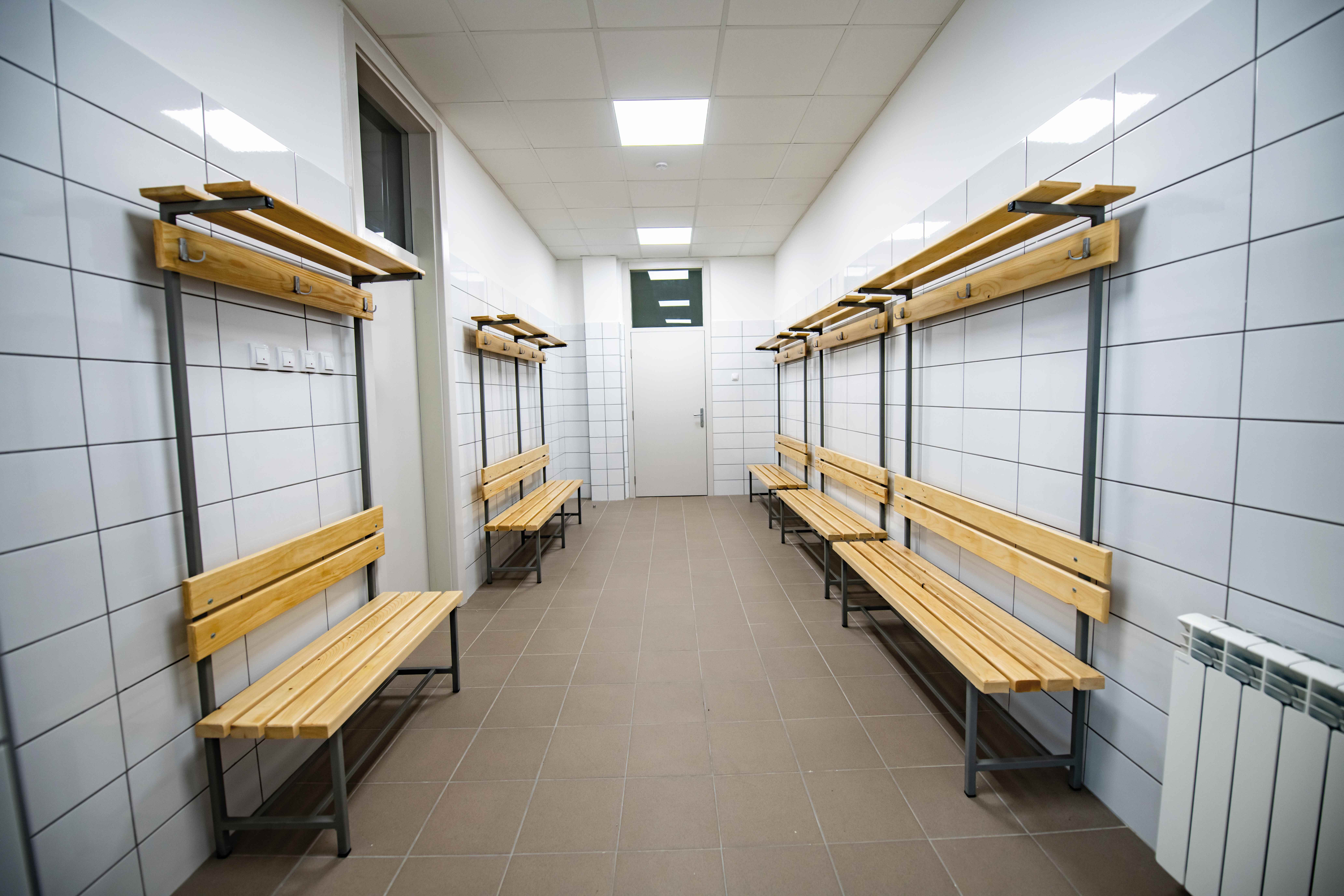
GROWING numbers of students are unhappy with traditional male and female changing rooms, claims the Swedish architectural practice White Arkitekter. Its Stockholm director Linda Thiel told EDB: “This stark binary choice can act as a deterrence, preventing some from wanting to participate in a beneficial and enjoyable experience.”
Thiel says that despite awareness of the issues around safety, underuse, and exclusionary design, changing rooms have changed very little since the 1950s.
“For decades, their layout has been shaped by the assumption that, like sport itself, getting changed is best done in groups separated by two genders. To make changing spaces feel both secure and inclusive, their design should better reflect the needs of users. This might involve the use of non-gendered areas, improved lighting, acoustics and materials, and, where necessary, private cubicles.”
White Arkitekter has explored the issue on behalf of the Swedish Research Council for Sports Science, and insights from the project are now being put into practice across the country.
Says Thiel: “Our research highlights successful examples of non-gendered changing rooms designed to prioritise safety and promote a sense of community. This approach is already being implemented in Sweden, where individuals can change in private cubicles, with or without showers.
“Such designs are particularly important in schools and public sports or outdoor facilities where traditional gender-segregated changing rooms often fail to meet everyone’s needs.”
The Swedish practice, which has an office in London, claims that the positive outcomes can be far-reaching: teachers or coaches can accompany their group or class into the changing area regardless of gender, while individuals who require assistance can receive support without logistical challenges.
Says Thiel: “Private cubicles, where provided, offer a safer, more comfortable experience for anyone who feels uneasy undressing in front of others, regardless of their gender.”
Thiel notes that the recent Supreme Court decision spelling out the legal definition of a woman may impact the roll-out of non-gendered changing spaces.
“This ruling has sparked multiple conversations around toilets and changing rooms facilities in the UK that often seem to be missing the bigger picture. We believe changing rooms are – and should be seen as – an integral part of the student’s journey through a sports or outdoor facility. The changing room is not just a space for undressing and showering; it is an integral part of the sporting experience; a place for socialising, sharing experiences, fostering community, and for reflection.
“It is high time we fundamentally rethink how we design and use our changing rooms and find solutions that make them welcoming, secure places for more students.”