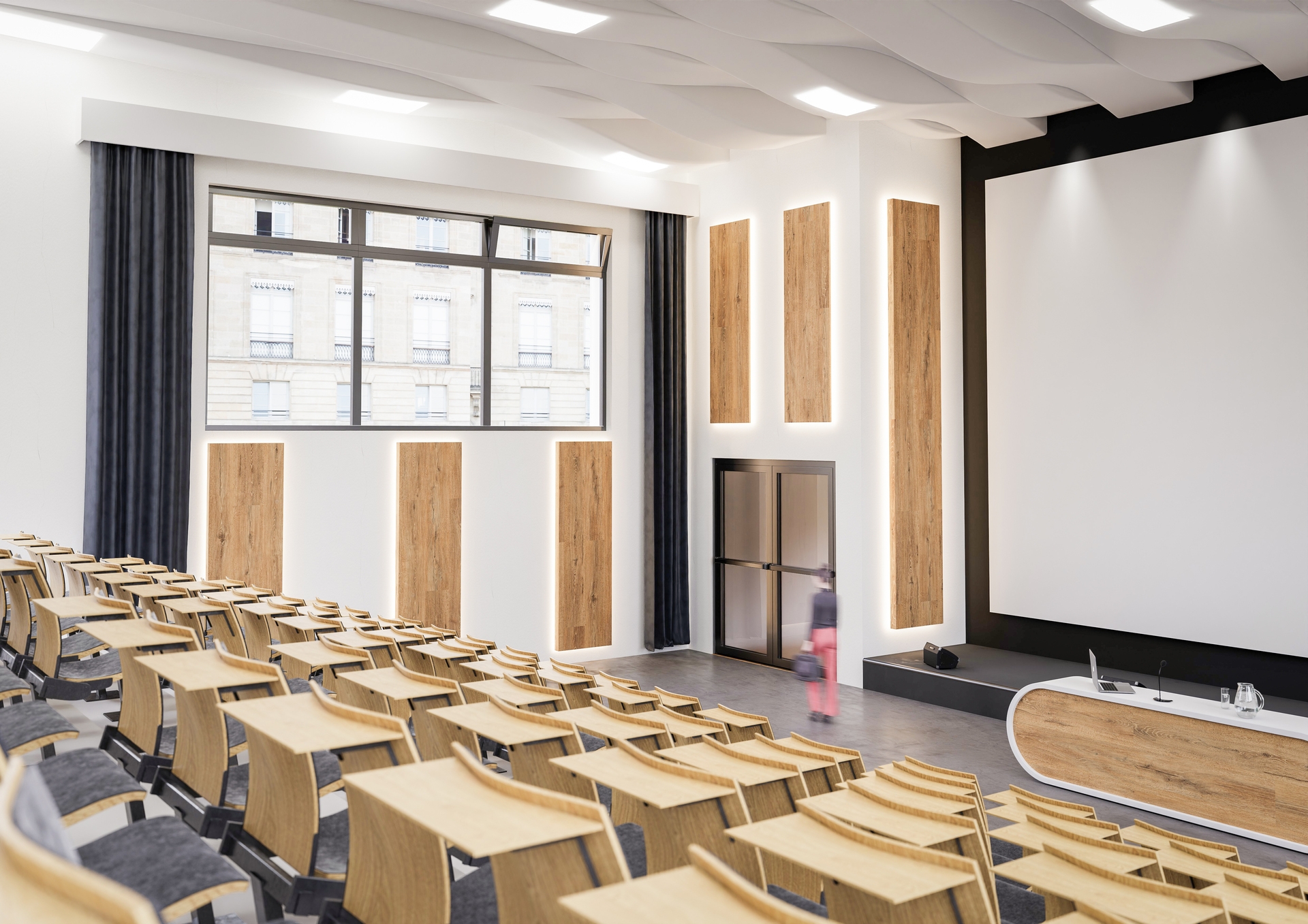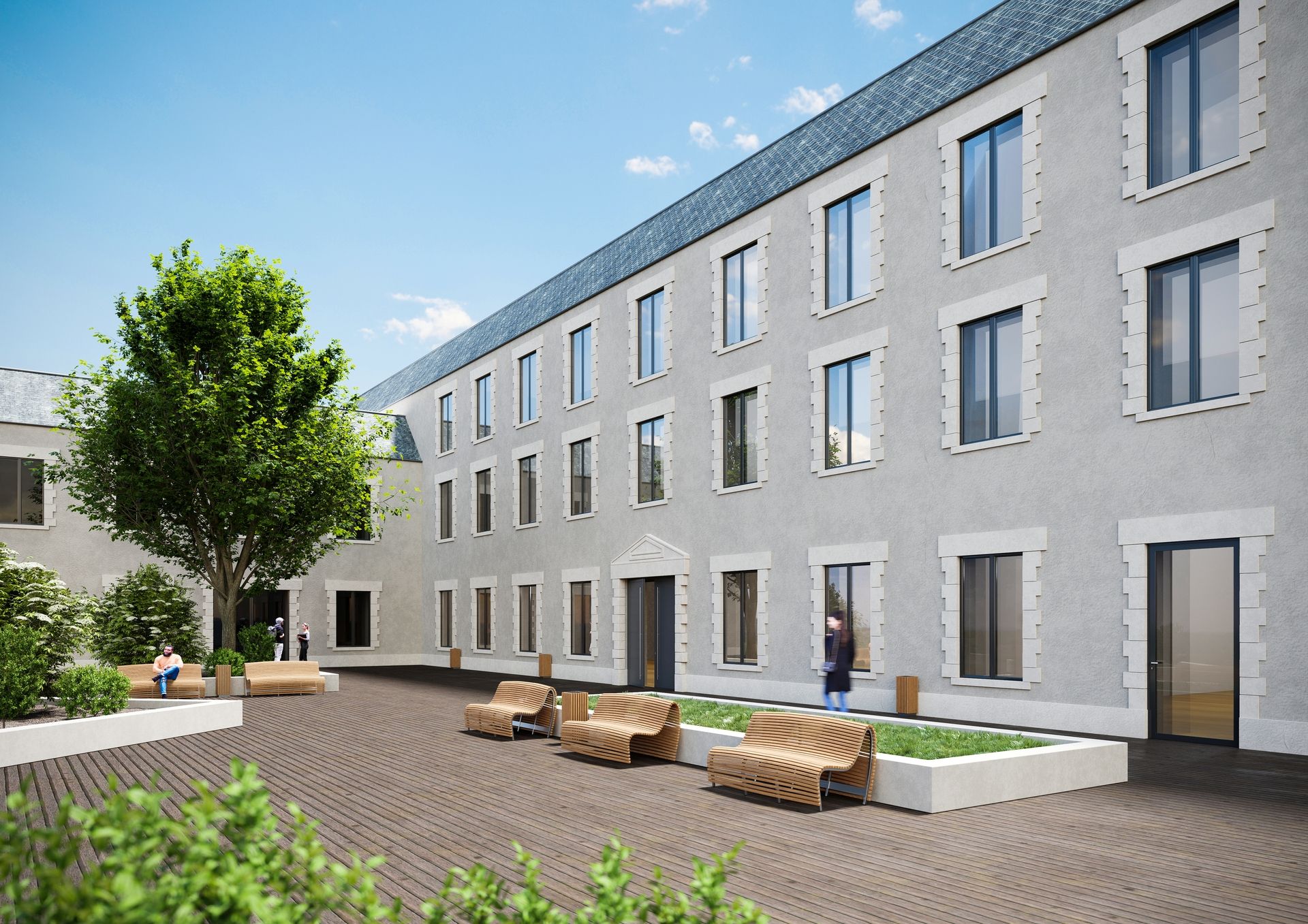
TECHNAL combines Passivhaus performance with low-carbon aluminium for education projects
Delivering Passivhaus or EnerPHit performance in schools and universities requires more than airtight detailing and low U-values. It demands a holistic approach that addresses both operational energy and embodied carbon. For glazed facades and curtain walling, this has traditionally been seen as a barrier — but recent advances in aluminium systems are changing that.
As part of Hydro, TECHNAL is leading this transformation. Our latest Passivhaus-certified systems enable architects to design bright, energy-efficient learning environments without compromising sustainability goals.
Passivhaus-certified facades and windows
The Passive House Institute now lists a growing number of certified curtain wall systems with overall U-values below 0.80 W/m²K for cool-temperate climates. Among them is TECHNAL’s TENTAL curtain wall system, which holds phA efficiency class certification for use in the UK and Ireland. For windows, SOLEAL Next 75 is also PHI-certified, offering exceptional thermal performance alongside balanced sightlines and design flexibility.
Performance highlights:
Both systems Hydro CIRCAL® 75R as standard, a low-carbon aluminium alloy made with at least 75% recycled post-consumer scrap.
Decarbonising aluminium facades at scale
Passivhaus is increasingly part of wider net-zero strategies that consider whole-life carbon. As grids decarbonise, embodied carbon becomes a dominant factor in building emissions. Facades are material-intensive and replaced multiple times during a building’s life, making them a critical climate lever.
TECHNAL addresses this challenge through Hydro CIRCAL® 75R, which has a verified footprint of as low as 1.9 kg CO₂e per kg aluminium — reducing emissions by up to 80–88% compared with the European average for primary aluminium. For selected projects, Hydro CIRCAL® 100R — 100% recycled post-consumer aluminium — achieves below 0.5 kg CO₂e/kg.
Lucile Souyri, Head of Sustainability at Hydro Building Systems, explains:“If we want to decarbonise the building and construction sector, we need to stop looking only at operational energy and start working systematically on materials, renovation, and circularity.”
This approach is already delivering results. Internal life cycle assessments show TECHNAL aluminium facade systems can achieve around 50% lower embodied carbon per square metre compared with market averages — without compromising thermal, acoustic or structural performance.
Supporting education sector sustainability
For schools and universities, Passivhaus offers a proven route to lower energy bills, improved indoor air quality and long-term resilience. By combining PHI-certified systems with low-carbon materials and circular design principles, TECHNAL provides a specification pathway that supports both operational and embodied carbon performance — essential for projects seeking to align with Department for Education sustainability standards and net-zero commitments
Discover moreLearn how TECHNAL can support your next project at www.technal.com/en-uk/commercial.