According to the National Audit Office (NAO), the UK’s 32,000 schools and early learning centres comprise nearly 100,000 buildings. This vast estate represents a significant source of carbon emissions. With hot water demands - from kitchens to showers - accounting for up to 30% of a school’s daily energy use, identifying efficient, lower-cost heating solutions is a paramount planning requirement.
The Department for Education (DfE) currently recommends centralised systems for high-use areas like kitchens, while prioritising local, non-storage point of use (PoU) electric heaters for basins to reduce standing heat losses.
However, this approach often drives the specification of oversized systems. We recently encountered a primary school specification requiring two 50kW CO₂ heat pumps and a 1,500L buffer for just three kitchen sinks. Combined with PoU heaters for 350 pupils, the capital cost reached £150,000. At approximately £430 per student, this represents a staggering 5% of annual per-pupil funding—an unsustainable investment for most budgets.
While zero-carbon goals drive these specifications, it is vital to remember that heat pumps and electric boilers are low-carbon, not zero-carbon; they remain tied to the grid’s carbon intensity. If an engineered electric system saves slightly less carbon for significantly less outlay while remaining Part L compliant, it is a superior design.
Furthermore, the price of electricity has recently been four to five times that of gas. This disparity, alongside ageing infrastructure, creates resistance to change. While the government has extended the gas phase-out to 2035, and given that new units are hydrogen blend ready, modernising gas systems should be viewed as a necessary stepping stone toward 2050, rather than a failure of sustainability.
The Hybrid Advantage
For new builds and schools transitioning to electric, we must move away from ‘low carbon regardless of cost’ strategies. The choice shouldn't be between a £150,000 CO₂ system and an inefficient alternative. Instead, well-designed hybrid electric systems can deliver the same results at a fraction of the capital cost.
A hybrid approach uses a heat pump more efficiently to provide pre-heat, rather than forcing it to handle direct high-temperature heating. This can offset up to 70% of costly direct electric demands. By combining the best of low-carbon technologies, schools can deploy smaller, more compact appliances with much lower upfront costs that are simpler to install and manage.
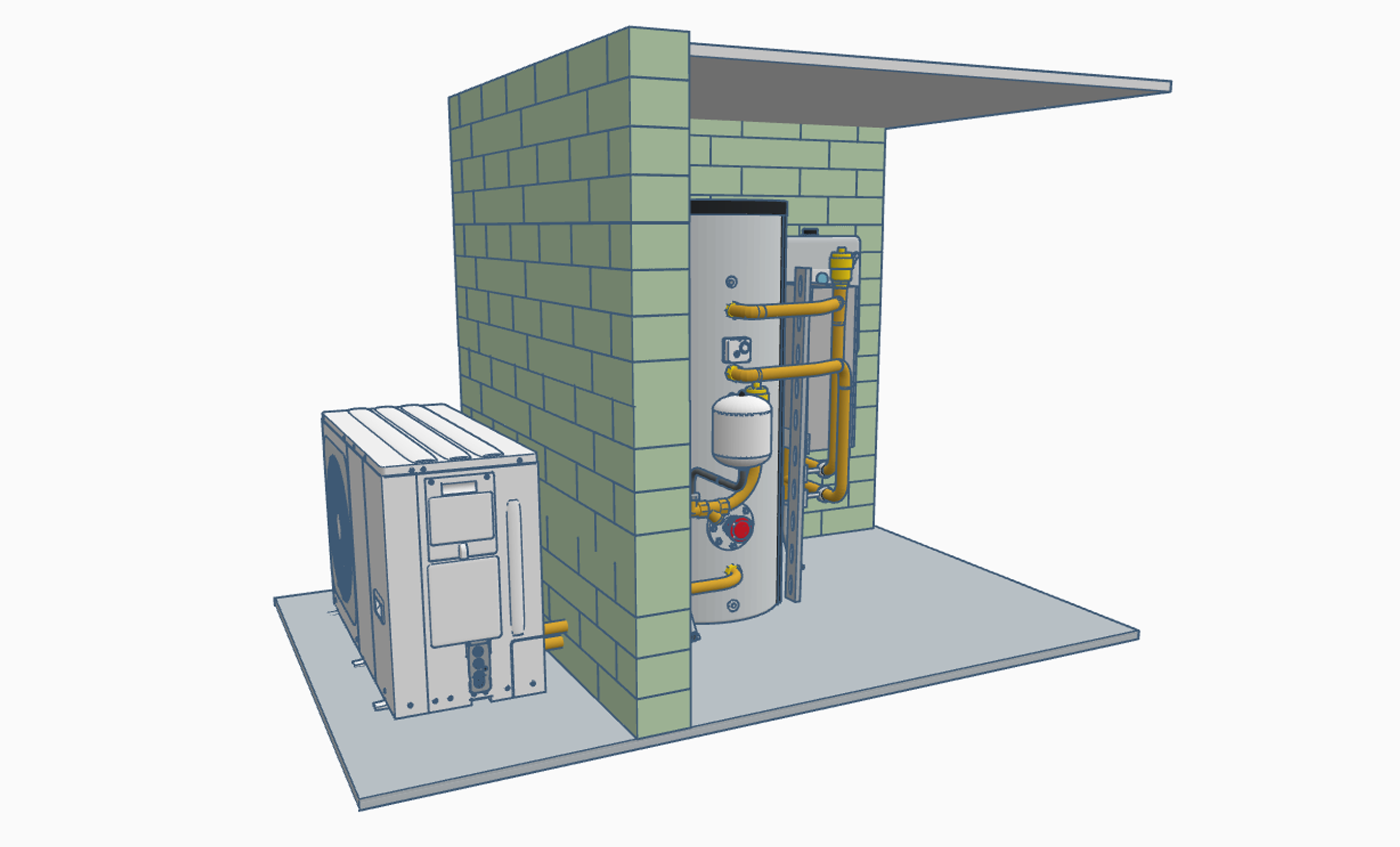
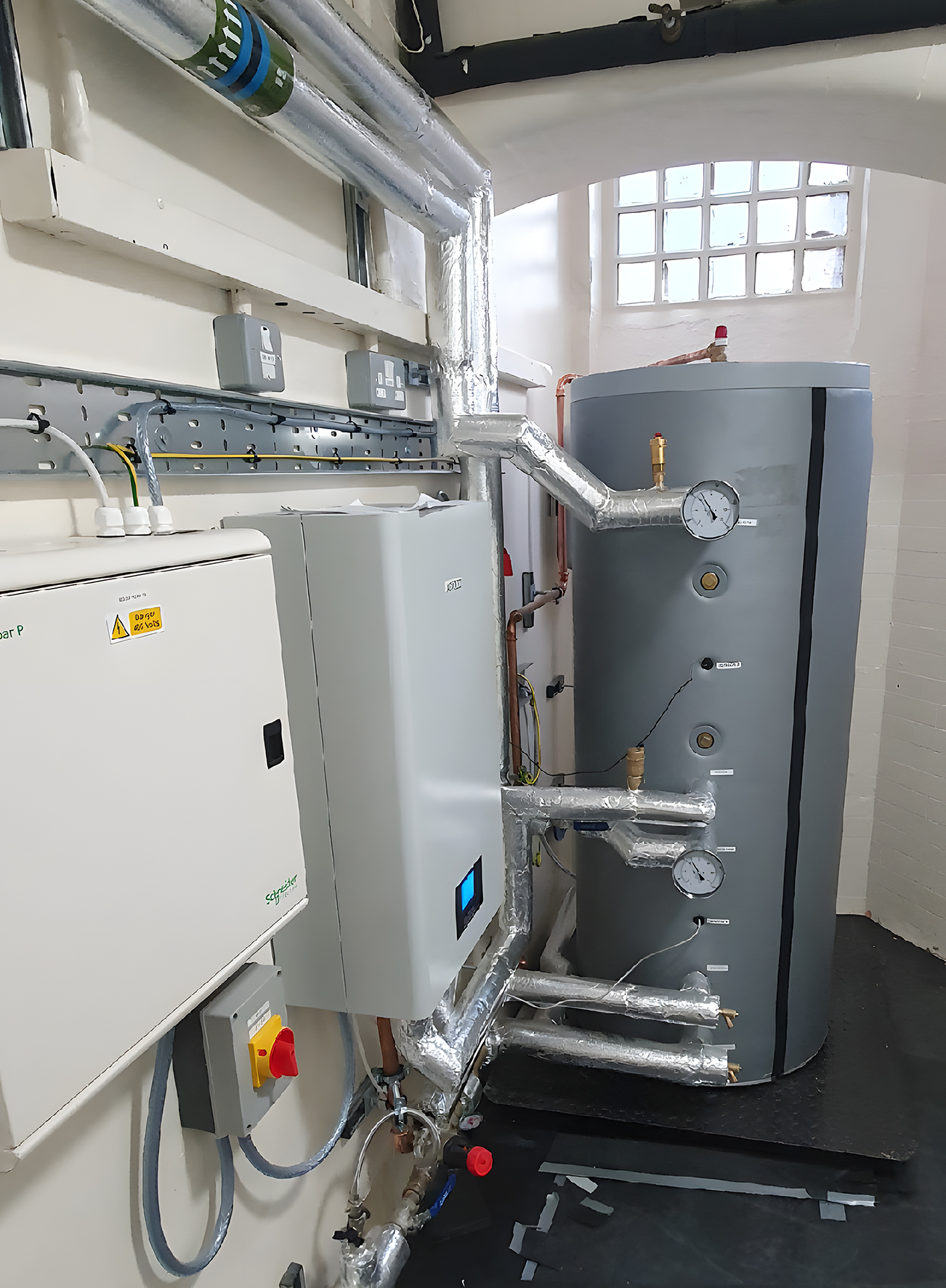
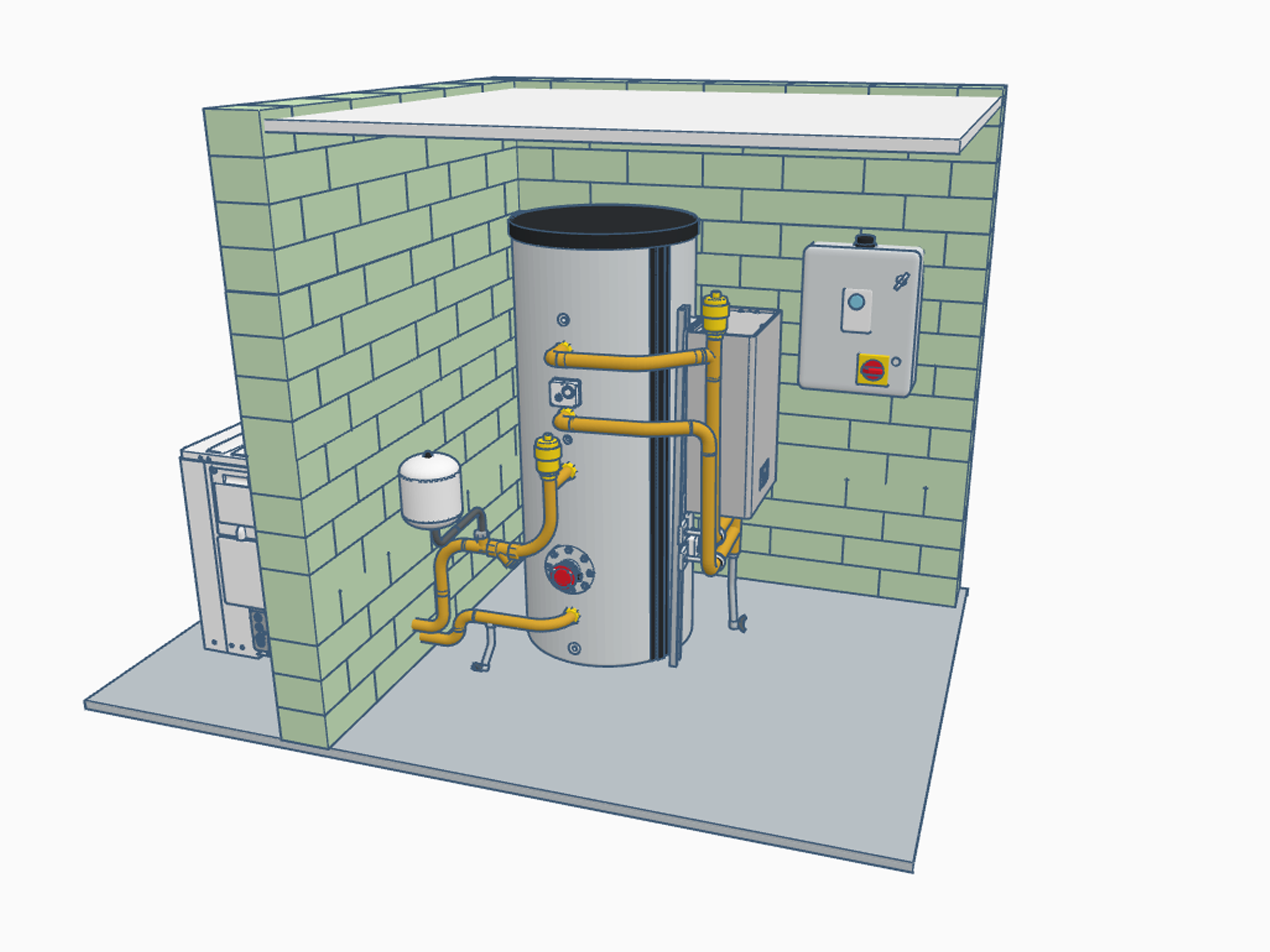
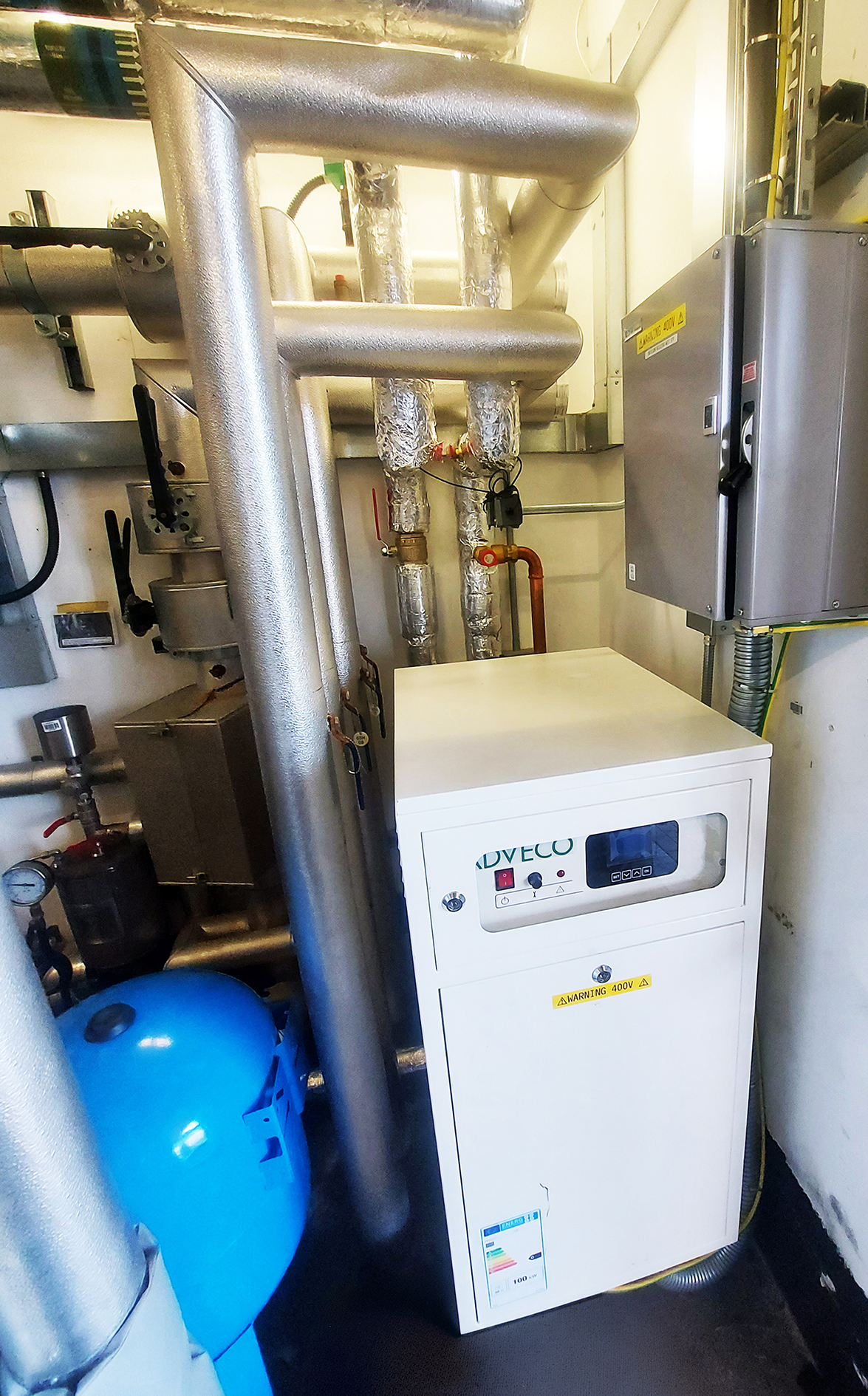
Adveco has championed this approach through our award-winning FUSION system. By integrating an electric boiler with a storage cylinder and balancing controls, FUSION creates an indirect water heater configuration. It integrates seamlessly with a heat pump to preheat water, leaving the boiler to merely ‘top up’ heat during peak demands.
plant rooms or external packaged units, potentially freeing up internal space for classrooms. Designed for basin-led demands in both new builds and retrofits, it can be equipped with an additional immersion to provide additional backup, ensuring reliability with no single point of failure for critical services. And, of course, since it utilises the same grid electricity as more expensive systems, FUSION will reach carbon neutrality on the exact same timeline as its high-cost counterparts, but at a price point that protects educational budgets.
By returning to smart engineering, schools can achieve their environmental targets without compromising their primary mission: the education and well-being of their students.