
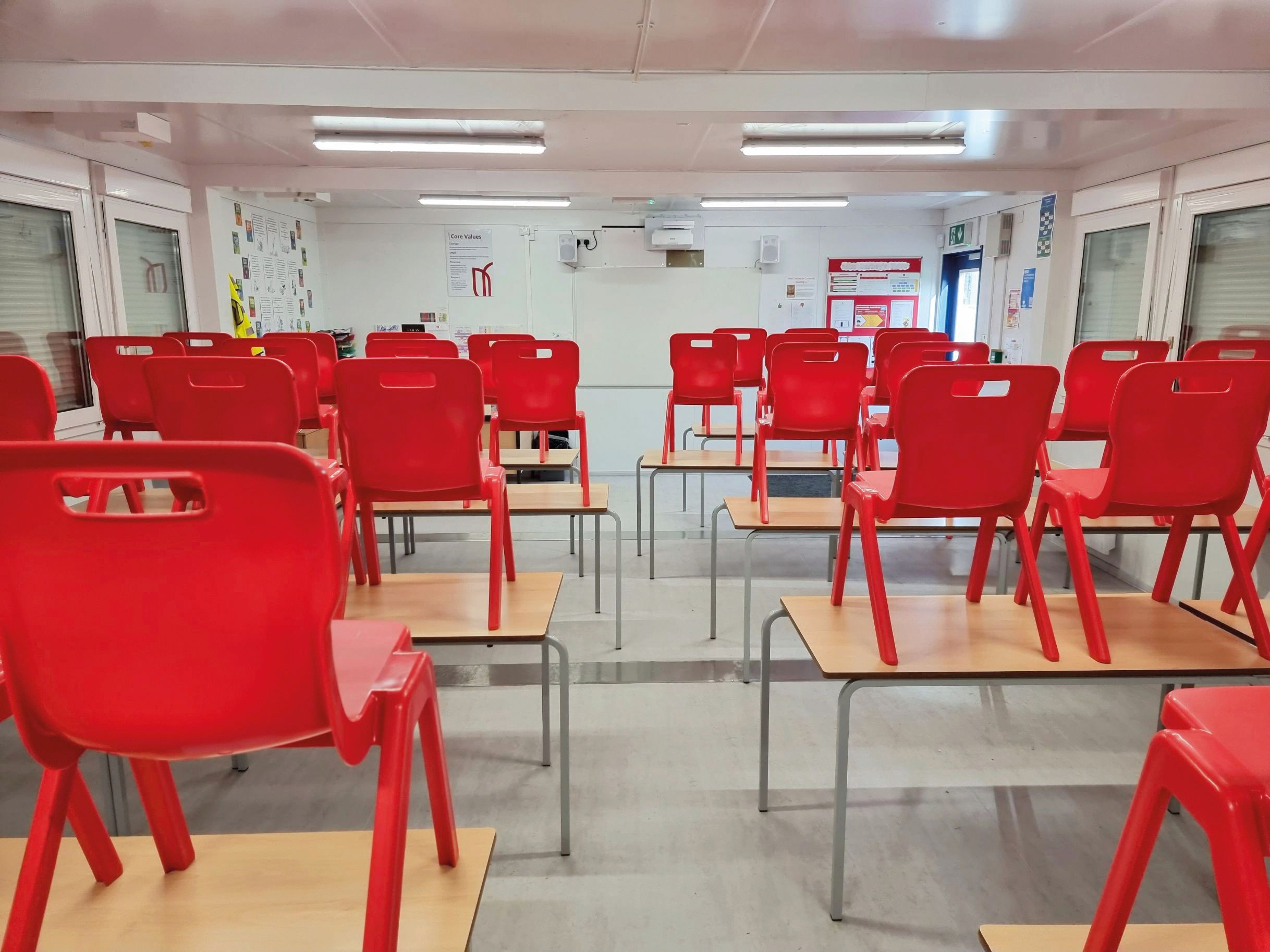
Andrew Nicholls from S Jones Modular Buildings, part of S Jones Containers, discusses how pre-fabricated modular cabins and containers can offer the speed and adaptability needed to meet the evolving requirements of the education sector
A LTHOUGH modular buildings were installed far more quickly than traditional and another illustration of how far once associated with short-term builds. This makes them particularly modular buildings have come. Here we fixes or temporary overflow useful when speed is of the essence. supplied one of the UK’s first fire-rated spaces, the sector has seen significant Inclusion is another area where modular school blocks to provide advancements. The outdated perception modular solutions can excel. With a accommodation for students while work on the main school buildings was underway. Despite initially being briefed as a temporary solution, the high quality and finish of the buildings allowed them to be used for extracurricular activities long after the new school facilities were completed. As the education sector continues to evolve, modular buildings are no longer just a short-term fix. They are an intelligent, long-term investment that allows schools to meet present challenges while preparing for the future and most importantly, choosing a modular approach does not require a compromise in terms of the compliance, performance, or the appearance of a building. of modular classrooms as uninspiring, draughty, or poorly equipped no longer reflects the reality of what is now possible. Our dedicated Modular Buildings division specialises in the supply of high performance, fully finished educational spaces that are built off-site by experienced engineers. These structures, specifically purpose-built cabins and containers, are manufactured and pre fabricated by our trading partner Containex to meet rigorous building regulations and offer a lifespan of at least 25 years, challenging the idea that modular means temporary.
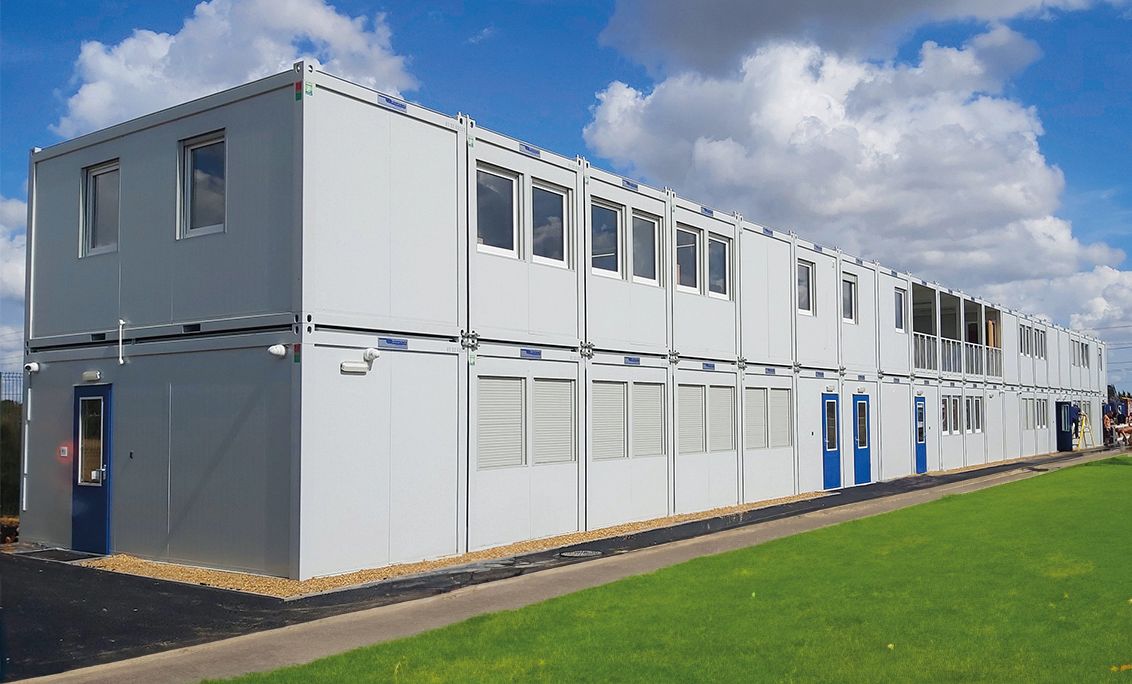
This shift from seeing modular buildings as stopgap to a more long-term solution is evident from our order book. Recently at Hedingham School and Sixth Form secondary school in Essex, three units have been used to form two separate buildings, and at the Grow Learn Play Project CIC in Banbury, we have created a new facility for nursery children. Installation at both sites took around two weeks after delivery.
As class sizes grow across many parts of the UK, schools must find ways to increase capacity without lengthy construction delays or disruption to learning. Off-site manufacturing means modular buildings can be delivered and growing emphasis on supporting pupils with Special Educational Needs and Disabilities (SEND), the ability to design tailored learning environments is vital. The flexibility of modular construction allows for purpose-built, accessible spaces that can be configured to individual requirements to ensure schools can support every learner. Off-site construction also enables a higher degree of quality control, which can translate into reduced maintenance needs over time. In addition, the use of modular buildings can support environmental goals by reducing construction waste. Despite their many advantages, modular buildings still face some outdated assumptions. The idea that they are visually unappealing or less robust than traditional structures is simply not true, as they can be thoughtfully designed, well-insulated, and finished to a high standard. By further incorporating decorative facades and energy-efficient systems, and giving schools the potential for future expansion, they offer a flexible solution that can adapt with the needs of the staff and students.
Our work with the South West Essex Community Education Trust at Orsett Heath Academy is a great example of this and other illustration of how far modular buildings have come. Here we supplied one of the UK’s first fire-rated modular school blocks to provide accommodation for students while work on the main school buildings was underway. Despite initially being briefed as a temporary solution, the high quality and finish of the buildings allowed them to be used for extracurricular activities long after the new school facilities were completed. As the education sector continues to evolve, modular buildings are no longer just a short-term fix. They are an intelligent, long-term investment that allows schools to meet present challenges while preparing for the future and most importantly, choosing a modular approach does not require a compromise in terms of the compliance, performance, or the appearance of a building.